How Much Does Home Insulation Really Save on UK Energy Bills?
The rising cost of energy bills in the UK is a pressing concern for many households. With prices fluctuating and the environmental impact of energy consumption under scrutiny, finding ways to reduce usage is more important than ever. One of the most effective long-term solutions is improving your home’s insulation. But how much does it really save? Let’s delve into the details.
The Uninsulated Truth: Where Your Heat Goes
Before we talk about savings, it’s crucial to understand where heat is typically lost in an uninsulated home. Imagine your home as a leaky bucket, constantly losing water (heat) through various holes:
Walls: Around 35% of heat can escape through uninsulated walls.
Roof/Loft: Another 25% can be lost through an uninsulated roof.
Windows & Doors: Approximately 20% can seep out through gaps and inefficient glazing.
Floor: Roughly 15% can be lost through uninsulated ground floors.
Draughts: The remaining 5% is often attributed to draughts from various cracks and openings.
This means a significant portion of the money you spend on heating literally goes straight out the window – or the walls, or the roof!
The Savings – A Breakdown by Insulation Type
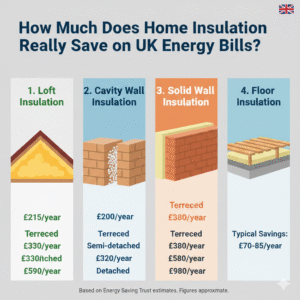
The amount you save will vary depending on the type of insulation you install, the size and style of your home, and your current energy consumption. However, here’s a general idea of potential annual savings based on Energy Saving Trust estimates (figures are approximate and can change):
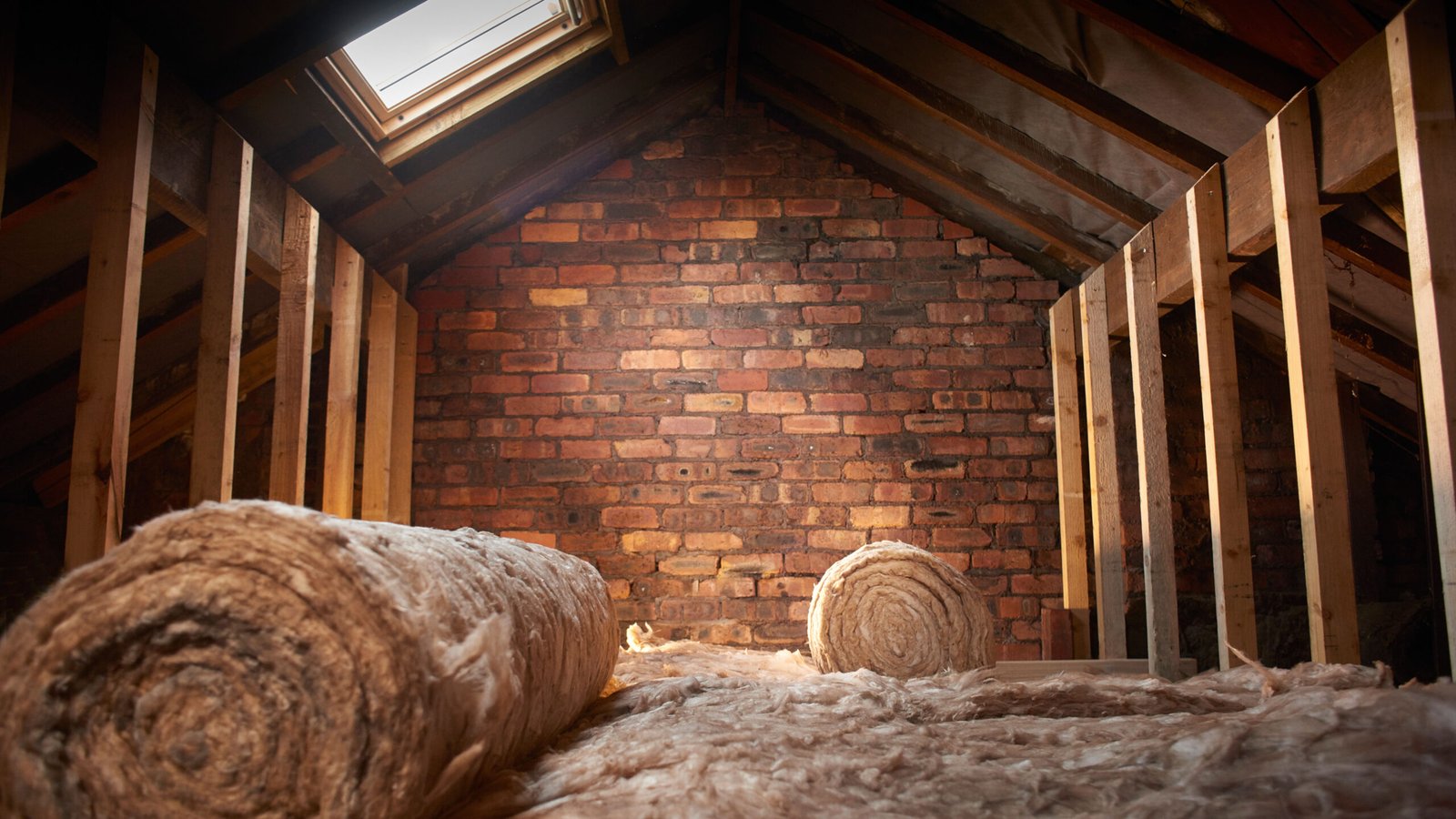
1. Loft Insulation
Loft insulation is often the cheapest and easiest form of insulation to install, offering some of the quickest returns.
Terraced House: Up to £215 per year
Semi-detached House: Up to £330 per year
Detached House: Up to £590 per year
Why it’s effective: Heat rises, so a well-insulated loft acts like a cap, preventing a significant amount of heat from escaping through your roof.
2. Cavity Wall Insulation
Many homes built after the 1920s and before the 1990s have cavity walls, which can be filled with insulation material.
Terraced House: Up to £200 per year
Semi-detached House: Up to £320 per year
Detached House: Up to £530 per year
Why it’s effective: Filling the gap between the two layers of brick creates a barrier, drastically reducing heat transfer through the walls.
3. Solid Wall Insulation (Internal or External)
Homes built before 1920 often have solid walls. While more expensive to install, the savings can be substantial.
Terraced House: Up to £380 per year
Semi-detached House: Up to £580 per year
Detached House: Up to £980 per year
Why it’s effective: Solid walls are major culprits for heat loss. Adding a layer of insulation, either on the inside or outside, provides a robust thermal barrier.
4. Floor Insulation
Insulating your ground floor can also lead to noticeable savings, especially if you have suspended timber floors.
Typical Savings: Around £70-£85 per year
Why it’s effective: Prevents heat from escaping downwards into the ground or unheated spaces.
Beyond the Financial Savings: Other Benefits
While financial savings are a primary motivator, insulation offers a host of other advantages:
Increased Comfort: Your home will feel warmer in winter and often cooler in summer, with fewer cold spots and draughts.
Reduced Carbon Footprint: By using less energy, you’re directly contributing to lower greenhouse gas emissions.
Improved EPC Rating: Better insulation will improve your home’s Energy Performance Certificate (EPC) rating, potentially increasing its value.
Reduced Noise: Some insulation types can also help to muffle outside noise, making your home a quieter sanctuary.
Is the Upfront Cost Worth It?
The initial investment for insulation can seem daunting, particularly for solid wall insulation. However, when you consider the cumulative savings over many years, plus the added comfort and environmental benefits, it’s generally a very worthwhile investment.
Many insulation measures pay for themselves within a few years through reduced energy bills. Furthermore, there are often government grants and schemes available in the UK to help homeowners with the cost of insulation, so it’s always worth checking what support you might be eligible for.
The Bottom Line
Home insulation isn’t just a “nice to have” – it’s a fundamental aspect of an energy-efficient home. While the exact savings will depend on your individual circumstances, the evidence is clear: investing in insulation can significantly cut your UK energy bills, making your home warmer, more comfortable, and more environmentally friendly for years to come.
Thinking about insulating your home? We can help you explore your options and connect you with trusted local installers.
Ready to Start Saving?
If you’re ready to make a significant, long-term reduction in your energy bills and increase the comfort of your home, contact the insulation experts at PETER SOUTHAM & SON today for a consultation.
Address: 20 St Michaels Close, Fringford, Bicester, Oxfordshire, OX27 8DW
Office Phone: 01869 278 333
Mobile Phone: 07721 633 220
Email: info@petersoutham.co.uk
Website: https://petersoutham.co.uk/